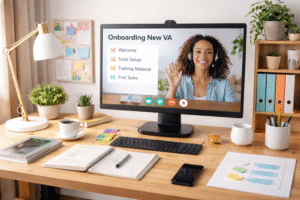
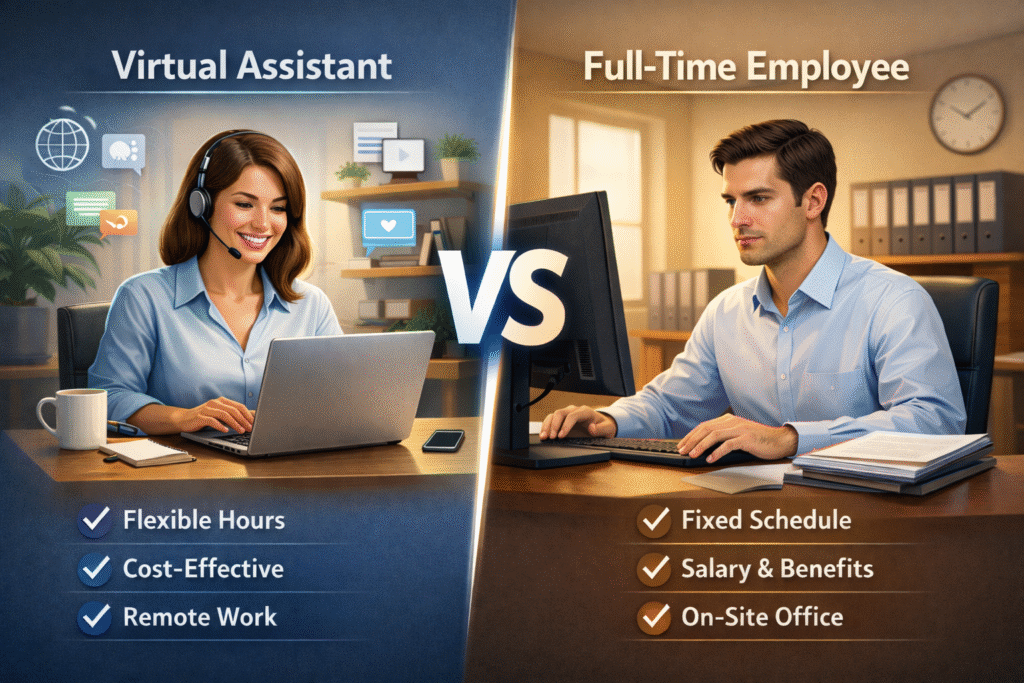
A virtual assistant offers remote, flexible support without the overhead costs of salaries, benefits, and office space, while a full-time employee provides in-house presence with fixed costs averaging $50,000-$70,000 annually plus benefits.
For growing businesses and entrepreneurs, virtual assistants deliver specialized skills on-demand at a fraction of traditional employment costs, making them ideal for scaling operations without long-term commitments.
Choosing between these two options impacts your budget, workflow, and growth potential. Understanding the core differences helps you build a lean, efficient team that supports your business goals without draining resources.
- Virtual Assistants: Cost 60-70% less than full-time employees with no benefits or office overhead required.
- Flexibility: Scale support up or down monthly without HR complications or long-term commitments.
- Specialized Skills: Access experts for specific tasks without hiring multiple full-time positions.
- Fast Deployment: Start working with qualified VAs within days, not weeks or months.
What Is a Virtual Assistant?
A virtual assistant is a remote professional who provides administrative, technical, or creative support to businesses and entrepreneurs from a remote location. Virtual assistants work as independent contractors, offering services on-demand without requiring traditional employment arrangements.
The virtual assistant model operates through flexible engagement. You hire support for specific tasks, projects, or time periods without the commitment of full-time employment.
Virtual assistants can handle diverse responsibilities across your business:
- Administrative Tasks: Email management, calendar scheduling, data entry
- Customer Service: Client communication, support tickets, inquiry responses
- Marketing Support: Social media management, content coordination, email campaigns
- Financial Tasks: Bookkeeping, invoice processing, expense tracking
You simply define your needs, communicate requirements clearly, and receive professional support without managing payroll, benefits, or office logistics.
📌Also Read: Tasks You Should Delegate to a Virtual Assistant Today
Cost Comparison: Virtual Assistant vs Full-Time Employee
The financial difference between hiring a virtual assistant and a full-time employee is substantial. Understanding the complete cost structure helps you make informed decisions about your staffing strategy.
The True Cost of Full-Time Employment
Full-time employees carry hidden costs that extend far beyond their base salary. Here’s what many business owners overlook:
- Base Salary: $50,000-$70,000 annually for administrative and support roles
- Benefits Package: Healthcare, retirement, paid time off adds 30-40% to base costs
- Payroll Taxes: FICA, unemployment, workers’ compensation insurance
- Office Overhead: Desk space, equipment, supplies cost $10,000+ per employee annually
- Training & Onboarding: 2-3 months of reduced productivity during ramp-up period
- HR Administration: Compliance, documentation, performance management time
Virtual Assistant Cost Structure
Virtual assistants eliminate most traditional employment expenses:
- No Benefits Required: VAs work as independent contractors, eliminating healthcare, retirement contributions, and paid time off expenses
- Zero Office Overhead: Skip the desk space, equipment, and supplies that burden in-house teams
- Pay for Productivity Only: Bill for actual work hours or project completion, not idle time or non-productive periods
- Scalable Investment: Adjust support levels monthly based on business needs without severance costs or hiring cycles
- No Payroll Taxes: Eliminate FICA, unemployment insurance, and workers’ compensation costs
A full-time administrative employee at $50,000 salary actually costs your business approximately $75,000 annually when you factor in benefits (30%), payroll taxes (10%), and office overhead ($10,000).
A virtual assistant providing equivalent support at 40 hours per week costs $31,200-$41,600 annually ($15-$20/hour) — a savings of $33,400-$43,800 per year.
Explore our service pricing and packages at VA4Growth to see how virtual assistant support fits your budget.
Comparison: Which Support Model Do You Need?
Understanding the differences helps you choose the right staffing strategy for your business stage and needs.
| Feature | Virtual Assistant | Full-Time Employee |
|---|---|---|
| Annual Cost | $15,000-$40,000 | $70,000-$100,000+ (including benefits) |
| Flexibility | Scale hours monthly, pause anytime | Fixed salary regardless of workload |
| Deployment Time | Days to start working | Weeks to months (hiring + onboarding) |
| Specialized Skills | Access multiple skill sets on-demand | Limited to hired role capabilities |
| Commitment | Monthly agreements, no long-term lock-in | Employment contracts, severance costs |
| Best Use Case | Administrative tasks, project support, specialized services | Leadership roles, culture building, daily collaboration |
Flexibility and Availability Advantages
Virtual assistants provide adaptability that traditional employment structures simply cannot match. This flexibility becomes increasingly valuable as your business grows and market conditions change.
On-Demand Scaling
Virtual assistants let you increase or decrease hours based on seasonal demands, project cycles, or business growth without HR complications. Need extra support during a product launch? Scale up instantly. Experiencing a slow quarter? Reduce hours without guilt or legal concerns.
Specialized Skill Access
Tap into experts for specific tasks like social media management, bookkeeping, or customer service without hiring multiple full-time positions. Each virtual assistant brings proven expertise in their specialty area, eliminating the training curve.
Time Zone Coverage
Access support across different time zones for extended business hours or global client service. While you sleep, your virtual assistant can handle customer inquiries, process orders, or manage international communications.
Project-Based Engagement
Bring in targeted help for launches, campaigns, or overflow periods without permanent commitments. When the project ends, so does the expense — no awkward conversations or severance packages required.
Need guidance on timing your hire? Check out when to hire a virtual assistant for practical decision frameworks.

Achieve Business Growth with Strategic Support
The virtual assistant vs full-time employee decision shapes your operational efficiency and growth trajectory. VA4Growth specializes in matching businesses with skilled remote professionals who deliver measurable results without traditional employment burdens.
Why Virtual Assistant Partnerships Drive Results
- Rapid Deployment: Start working with qualified virtual assistants within days, not the weeks or months required for traditional hiring processes
- Proven Systems: Our virtual assistants use established workflows and tools, eliminating the training period that new employees require
- Performance Focus: Task-based accountability ensures your virtual assistant delivers measurable outcomes rather than just filling seat time
- Risk Mitigation: Test virtual assistant relationships with monthly agreements instead of locking into annual salaries and employment contracts
- Administrative Relief: Skip payroll taxes, workers’ compensation insurance, and HR management that comes with full-time employees
Unlike traditional staffing that demands long-term commitments and fixed overhead, virtual assistant partnerships through VA4Growth provide immediate value with complete flexibility.
Discover our VA4Growth service offerings designed for businesses at every growth stage.
📌Also Read: Outsourcing vs Offshoring: Understanding Your Options
Decision Factors for Your Business
When weighing the virtual assistant vs full-time employee choice, consider these practical elements that directly impact your operations and bottom line.
Task Complexity and Nature
Routine tasks like email management, scheduling, data entry, and social media posting are perfect for virtual assistants. These responsibilities don’t require physical presence and benefit from specialized expertise.
Roles requiring daily in-person interaction, company culture immersion, or leadership presence may suit full-time hires better. Strategic positions that shape company direction often justify the higher investment.
Budget Reality
Calculate total employment costs including benefits, taxes, equipment, and space. Virtual assistants typically cost 60-70% less than equivalent full-time positions when you account for all expenses.
Consider your cash flow constraints and growth priorities. Virtual assistants let you invest savings into marketing, product development, or other revenue-generating activities.
Growth Stage
Startups and scaling businesses benefit from virtual assistant flexibility. You need support without the financial burden of full-time salaries when revenue fluctuates.
Established companies with predictable workloads might prefer full-time staff for certain core roles while using virtual assistants for specialized or overflow tasks.
Management Capacity
Virtual assistants require clear communication and defined processes. If you have strong systems and remote management skills, virtual support thrives.
Companies without established workflows may need to develop documentation and communication practices before maximizing virtual assistant effectiveness.
Curious about specific virtual assistant capabilities? Learn what is a virtual marketing assistant and how specialized support drives results.
- Choose Virtual Assistants For: Administrative tasks, specialized projects, flexible workload needs, budget constraints, rapid scaling
- Choose Full-Time Employees For: Leadership roles, culture building, highly sensitive work, daily physical collaboration requirements
- Hybrid Approach: Many successful businesses use both — full-time for core leadership and virtual assistants for specialized support
Ready to Make Your Decision?
Don’t let traditional employment models limit your growth potential. Virtual assistants offer the skilled support you need with the financial flexibility your business deserves.
Whether you’re bootstrapping a startup or optimizing an established operation, the right support model transforms your productivity and bottom line. The businesses that thrive are those that match their staffing strategy to their actual needs rather than following outdated employment norms.
Take the Next Step
Contact the VA4Growth team today to discuss how virtual assistant support can replace expensive full-time hires while delivering superior results.
You May Also Read
- Tasks You Should Delegate to a Virtual Assistant Today
- Virtual Assistant Contract Template
- Red Flags When Hiring a Virtual Assistant (And How to Avoid Them)
Frequently Asked Questions: Virtual Assistant vs Full-Time Employee
Choosing between virtual assistants and full-time employees requires understanding practical differences in cost, reliability, flexibility, and operational impact. These answers address the most common concerns business owners face when making staffing decisions.
Which is more flexible for my business, a VA or a full-time employee?
A virtual assistant provides significantly more flexibility than a full-time employee. You can scale hours up or down monthly, pause services during slow periods, and avoid long-term employment contracts.
Virtual assistants work on-demand, letting you adjust support levels as your business needs change without severance costs or HR complications. This flexibility is especially valuable for businesses with seasonal fluctuations or unpredictable growth patterns.
Full-time employees represent fixed costs regardless of workload variations. Even during slow periods, you continue paying full salary and benefits, creating financial pressure that doesn’t exist with virtual assistant relationships.
Can a VA be as reliable as an in-house employee?
Yes, professional virtual assistants often exceed in-house employee reliability. VA4Growth virtual assistants are accountable for deliverables rather than just showing up, creating strong performance incentives.
With proper communication systems and clear expectations, virtual assistants provide consistent, high-quality work without the attendance issues, personal conflicts, or distractions that affect office environments.
Virtual assistants build their reputation and business on performance. Unlike employees who receive paychecks regardless of output quality, virtual assistants must continuously deliver results to maintain client relationships.
The key to virtual assistant reliability is establishing clear processes, using project management tools, and maintaining regular communication. These systems actually improve accountability compared to informal office arrangements.
Which is more cost-effective for my small business?
Virtual assistants are substantially more cost-effective for small businesses. You eliminate 30-40% in benefits costs, $10,000+ in annual office overhead, and payroll tax burdens.
Virtual assistants bill only for productive hours, while full-time employees cost the same regardless of workload. This means you’re not paying someone to sit idle during slow periods or handle personal tasks during work hours.
For most small businesses, virtual assistants deliver equivalent or better results at 60-70% lower total cost. The savings can be reinvested into growth initiatives like marketing, product development, or customer acquisition.
The only scenario where full-time employees might be more cost-effective is when you have consistent, predictable work that requires 40+ hours per week of identical tasks year-round — and even then, the flexibility advantage of virtual assistants often outweighs any marginal cost difference.
What tasks should I give a VA instead of a full-time hire?
Assign virtual assistants administrative work like email management, calendar scheduling, data entry, customer service responses, social media management, bookkeeping, research, and content coordination.
These tasks don’t require physical presence and benefit from specialized skills that virtual assistants bring. Many virtual assistants specialize in specific areas, giving you expert-level support without training time.
Reserve full-time hires for roles demanding daily in-person collaboration, company culture leadership, or highly sensitive proprietary work that requires deep organizational knowledge.
Marketing support, customer service, administrative tasks, and technical projects work perfectly for virtual assistants. Strategic planning, team leadership, and face-to-face client relationships typically suit full-time employees better.
How will communication differ between a VA and an in-house employee?
Communication with virtual assistants relies on digital tools like email, Slack, Zoom, and project management platforms rather than desk-side conversations. This requires clearer written instructions and defined expectations upfront.
However, many businesses find virtual assistant communication more efficient since everything is documented, trackable, and less prone to informal miscommunication that happens in office settings.
The digital-first approach actually improves accountability. You have written records of assignments, deadlines, and deliverables rather than relying on memory from hallway conversations.
Successful virtual assistant relationships use scheduled check-ins (daily or weekly), project management software for task tracking, and clear communication protocols. Once established, this system often works better than casual office communication.
The key is setting clear expectations from the start and using the right tools. Video calls maintain personal connection while written communication creates clarity and accountability.