
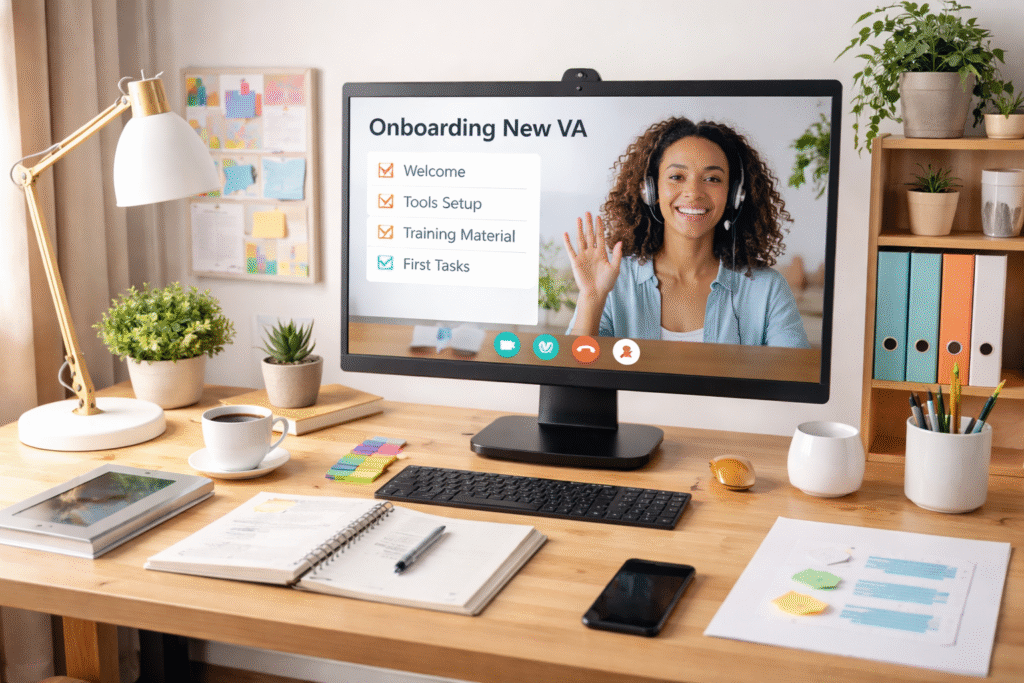
The va onboarding process is a structured system for integrating a new virtual assistant into your business, covering everything from initial setup to ongoing training. A well-planned onboarding approach typically takes 1-2 weeks and dramatically improves productivity, reduces miscommunication, and helps your VA deliver results faster.
Whether you’re hiring your first virtual assistant or building a remote team, getting onboarding right makes all the difference. A smooth transition sets clear expectations, builds confidence, and creates a foundation for long-term success.
In this guide, we’ll walk you through every stage of onboarding a VA, from preparation to the first 90 days. You’ll learn practical steps, common pitfalls to avoid, and how to create a process that works for both you and your new team member.
- Structured Process: 1-2 week onboarding reduces confusion and accelerates productivity
- Clear Documentation: SOPs, training materials, and process guides prevent repetitive explanations
- Regular Check-Ins: Daily contact in week 1-2, then gradually reduce as independence grows
- Measurable Success: Track time to completion, error rates, and confidence levels throughout onboarding
Ready to build your remote team? Explore our virtual assistant services for businesses and entrepreneurs and find the right support for your growth.
What Is the VA Onboarding Process
The va onboarding process is the complete journey of bringing a virtual assistant into your organization. It includes everything from sending login credentials to establishing communication protocols and defining success metrics.
Unlike traditional employee onboarding, VA onboarding happens entirely remotely. This means you need clear documentation, reliable communication tools, and structured check-ins to make sure nothing gets missed.

Key Components of VA Onboarding
A thorough onboarding process covers several important areas. Each component builds on the previous one to create a complete integration experience.
Documentation and Access: Your VA needs access to the right tools, files, and systems from day one. This includes email accounts, project management platforms, cloud storage, and any specialized software your business uses.
Training and Knowledge Transfer: Even experienced VAs need to learn how your business operates. Share your processes, brand guidelines, communication preferences, and any industry-specific knowledge they’ll need.
Expectations and Goals: Clear goals prevent confusion and wasted effort. Define what success looks like, establish performance metrics, and set realistic timelines for different tasks.
Communication Framework: Establish how often you’ll meet, which channels to use for different types of messages, and what response times are expected. This prevents miscommunication and keeps projects moving forward.
How VA Onboarding Differs From Traditional Hiring
Traditional onboarding happens in an office where new hires learn by observing, asking quick questions, and getting real-time guidance. VA onboarding is different because remote work removes that natural proximity, so structure matters more.
Processes must be documented, recorded, or shared through screen walkthroughs instead of explained once in person. Time zone differences also require clear, asynchronous communication to keep work moving smoothly.
On top of that, VA roles vary—from part-time support to full-time team members—so onboarding must be flexible. A strong VA onboarding system fills these gaps and sets clear expectations from day one.
📌Also Read: Red Flags When Hiring a Virtual Assistant (And How to Avoid Them)
Why the VA Onboarding Process Matters
Skipping or rushing onboarding creates problems that compound over time. Poor onboarding leads to confusion, mistakes, and frustration on both sides. A solid process saves time and money while building a stronger working relationship.

Impact on Productivity and Performance
VAs who go through structured onboarding hit their stride faster. They make fewer mistakes, ask better questions, and complete tasks with less supervision. This means you see a return on your investment sooner.
Without proper onboarding, even talented VAs struggle. They spend hours guessing at your preferences, redoing work that doesn’t match your standards, or waiting for answers to questions that should have been covered upfront.
Research shows that employees with positive onboarding experiences are 69% more likely to stay with a company for three years. While VAs operate differently than traditional employees, the principle holds true. Good onboarding builds loyalty and reduces turnover.
Building Trust and Clear Communication
Onboarding is where trust starts. When you invest time in training and supporting your VA, they feel valued and committed to your success. This foundation makes it easier to delegate important tasks and grow the relationship over time.
Clear communication patterns established during onboarding prevent most common VA-client conflicts. When everyone knows how to share updates, ask questions, and report problems, small issues get resolved before they become big ones.
Skip the foundation work and you’ll deal with cracks, settling, and structural problems for years. Invest time upfront, and everything built on top stands solid. The same applies to your VA relationship—those first few weeks determine whether you’ll have a productive partnership or constant frustration.
Step-by-Step VA Onboarding Process
Breaking down onboarding into clear stages makes it manageable and ensures nothing gets overlooked. Here’s how to structure your VA onboarding from start to finish.
Before Day One: Preparation Phase
The work starts before your VA’s first day. Proper preparation makes their first week productive instead of confusing.
Create a welcome packet that includes an overview of your company, your VA’s role description, and key contacts. Add links to any training materials, SOPs (standard operating procedures), and tools they’ll use.
Set up all necessary accounts and access permissions. Nothing kills momentum like spending the first day waiting for IT access. Have email, project management, file storage, and communication tools ready to go.
Schedule their first week. Book intro calls, training sessions, and regular check-ins. Having a structured schedule helps your VA feel supported and gives them a clear path forward.
Week One: Foundation Building
The first week focuses on orientation and basic training. Your goal is to help your VA understand the big picture before diving into specific tasks.
Day 1-2: Orientation and Setup
- Welcome call to review the onboarding plan
- Tour of all tools and systems
- Introduction to team members (if applicable)
- Review of communication protocols and availability
Day 3-5: Initial Training
- Walk through 2-3 simple tasks they’ll do regularly
- Share relevant SOPs and process documents
- Complete first small project together
- Daily check-ins to answer questions
Week Two: Hands-On Learning
Week two shifts to practical application. Your VA starts handling real tasks with guidance and feedback.
Assign increasingly complex projects as they demonstrate competence. Start with tasks that have clear instructions and low stakes. Gradually introduce more nuanced work that requires judgment.
Schedule mid-week and end-of-week review calls. Use these to give feedback, adjust processes, and address any confusion. This frequent touch point helps catch problems early.
Document questions and create FAQ resources as issues come up. These will help future VAs and reduce repetitive explanations.
Month One: Building Independence
By the end of the first month, your VA should handle most routine tasks independently. They’ll still need guidance on complex projects, but daily work flows smoothly.
- Complete assigned tasks with minimal supervision
- Proactively communicate about roadblocks
- Demonstrate understanding of your preferences and standards
- Suggest process improvements based on their experience
Conduct a formal 30-day review. Discuss what’s going well, what needs improvement, and adjust expectations if needed. This is also a good time to introduce new responsibilities if they’re ready.
Months Two and Three: Full Integration
The second and third months focus on refinement and expansion. Your VA takes on more strategic work and becomes a true partner in your business.
Introduce more complex projects that require independent decision-making. Give them ownership of specific areas or processes. This builds confidence and frees up more of your time.
Reduce check-in frequency as trust grows. Move from daily to weekly calls, or even bi-weekly for highly independent VAs. Maintain open communication channels but let them work without constant oversight.
📌Also Read: Tasks You Should Delegate to a Virtual Assistant Today
Common VA Onboarding Challenges and Solutions
Even with a solid plan, onboarding comes with challenges. Here are the most common issues and how to address them.
| Challenge | Why It Happens | Solution |
|---|---|---|
| Technology Overwhelm | Too many new tools introduced at once | Introduce tools gradually over 2 weeks. Start with essentials only. |
| Communication Gaps | Unclear expectations about response times and update frequency | Create a communication charter that specifies channels, response times, and meeting schedules. |
| Task Confusion | Vague instructions or missing context | Use video recordings to demonstrate tasks. Create checklists and templates. |
| Timezone Misalignment | Expecting real-time responses across different time zones | Embrace asynchronous work. Set core overlap hours for urgent matters only. |
| Cultural Differences | Different work styles and communication norms | Discuss work preferences openly. Be explicit about expectations that might be culturally specific. |
Handling Slow Progress or Learning Curves
Some VAs pick things up immediately, while others need more time. Both can become excellent team members with the right support.
If progress seems slow, first check your training materials. Are instructions clear? Do you demonstrate tasks or just describe them? Video walkthroughs and screen recordings eliminate ambiguity.
Break complex tasks into smaller steps with checkpoints. Instead of assigning a full project, guide them through each phase with feedback loops. This builds competence without overwhelming them.
Consider whether you’re measuring the right things. Early speed matters less than accuracy and understanding. A VA who takes longer but asks good questions and learns thoroughly will outperform one who rushes through tasks without grasping the fundamentals.

VA Onboarding Best Practices
These proven strategies help you create an onboarding experience that sets both you and your VA up for success.
Creating Reusable Onboarding Materials
Document everything once and use it repeatedly. This saves massive amounts of time and ensures consistency across multiple VAs.
Essential Onboarding Documents:
- Welcome guide with company overview and values
- Tool access guide with login instructions and tutorials
- Process library with step-by-step SOPs for common tasks
- Style guide covering tone, formatting, and brand standards
- FAQ document that grows as questions come up
Record video tutorials for tasks you’ll assign regularly. Screen recordings with voiceover narration are more effective than written instructions for complex processes. Tools like Loom make this simple.
Create templates for repetitive tasks. Email responses, report formats, social media posts, and project briefs all benefit from templates that maintain consistency while saving time.
Setting Clear Expectations and Metrics
Ambiguity is the enemy of good VA relationships. Define success clearly from the start.
| Area | What to Define | Example |
|---|---|---|
| Work Hours | Expected availability and response times | “Online 9am-5pm EST, respond to Slack within 2 hours during work hours” |
| Task Completion | Quality standards and deadlines | “Blog posts due 2 days before publish date, following editorial checklist” |
| Communication | Update frequency and format | “Daily summary at EOD, weekly strategy call on Mondays” |
| Decision Making | What requires approval vs. independent action | “Under $50: decide independently. Over $50: get approval first” |
| Performance Metrics | How success is measured | “Tasks completed on time, error rate below 5%, positive client feedback” |
Review and adjust these expectations after the first month. What works on paper doesn’t always work in practice. Flexibility shows you value their input and creates a collaborative relationship.
Scheduling Regular Check-Ins
Consistent communication prevents small problems from becoming big ones. Structure your check-ins to match the stage of onboarding.
- Week 1-2: Daily 15-minute check-ins at the start or end of their workday. Keep it light and focused on questions and immediate needs.
- Week 3-4: Three times per week, 20-30 minutes. Review completed work, give feedback, and plan upcoming tasks.
- Month 2-3: Weekly calls, 30-45 minutes. Mix tactical task review with strategic discussion about process improvements and growth.
- Month 4+: Bi-weekly or monthly, depending on the VA’s independence level and the complexity of their role.
Between scheduled calls, maintain open channels for questions and updates. Async communication via Slack, email, or your project management tool keeps things moving without constant meetings.
Tools and Resources for Effective VA Onboarding
The right tools streamline onboarding and make it easier for your VA to get up to speed. Here’s what works best for remote teams.
Essential Software and Platforms
Project Management: Tools like Asana, Trello, or ClickUp keep tasks organized and visible. Your VA can see what needs to be done, track progress, and access related files all in one place.
Communication: Slack for quick messages and updates, Zoom for video calls, and email for formal communication creates a complete communication system. Define which tool to use for what type of message.
File Storage: Google Drive, Dropbox, or OneDrive ensure your VA can access necessary files from anywhere. Organize folders logically and set appropriate permissions.
Time Tracking: Tools like Toggl or Harvest help VAs track their time and help you understand where hours are going. This is especially important if you’re paying hourly.
Password Management: LastPass or 1Password let you share account access securely without exposing passwords. This protects your business while giving your VA what they need.
📌Also Read: Virtual Assistant Contract Template: Protect Your Business
Training and Knowledge Base Solutions
- Loom: Record quick video tutorials showing exactly how to complete tasks. VAs can watch and rewatch at their own pace.
- Notion or Confluence: Create a central knowledge base where all your SOPs, guides, and resources live. Make it searchable and well-organized.
- Google Docs: Collaborative documents work great for living documents that evolve over time, like FAQ pages or process notes.
- Screencasts and Tutorials: Walk through your tools and processes with narrated screen recordings. These prevent repetitive explanations and work better than written instructions for visual learners.
Measuring Onboarding Success
Track key metrics to understand if your onboarding process is working.
- Time to First Task Completion: How long before your VA successfully completes their first task independently? Faster is better, but accuracy matters more than speed.
- Question Frequency: Early on, lots of questions are good. As time passes, questions should become less frequent and more strategic.
- Error Rate: Track mistakes in the first 30, 60, and 90 days. A declining error rate shows effective learning.
- Confidence Level: Ask your VA to rate their confidence on a 1-10 scale for different tasks. This subjective measure often reveals training gaps before they cause problems.
- Retention: Do VAs stick around or quit after a few weeks? High early turnover often indicates onboarding problems.
Your Next Steps After Mastering the VA Onboarding Process
Now that you understand the VA onboarding process, you can build a system that works for your business. Remember that onboarding isn’t a one-time event but an ongoing investment in your team’s success.
Start by documenting your current processes, even if they’re informal. Turn tribal knowledge into shareable resources. Each time you explain something to your VA, record it or write it down. Your future self will thank you.
The best onboarding systems evolve based on feedback. Ask your VA what worked well and what could be better. They’ll have insights that help you refine the process for the next person.
Still weighing your options between a VA and a full-time hire? Our guide on virtual assistant vs full-time employee breaks down the differences to help you make the best choice for your business.
Ready to start building your remote team? Contact the VA4Growth team today to discuss how our experienced VAs can support your growth, with full onboarding support included.
You May Also Want to Read
- Outsourcing vs Offshoring: Which Business Strategy is Right for You?
- Small Business Digital Marketing Guide for Growth
- When to Hire a Virtual Assistant: 4 Signs It’s Time to Delegate
Frequently Asked Questions About the VA Onboarding Process
Understanding the VA onboarding process helps you set realistic expectations and create a smooth integration experience. These answers address the most common questions business owners have about bringing virtual assistants onto their teams.
What is VA onboarding?
VA onboarding is the process of integrating a new virtual assistant into your business operations. It includes providing access to tools, training on your processes, setting expectations, and establishing communication protocols.
Good onboarding helps your VA understand your business, work independently faster, and deliver results that match your standards. It covers everything from login credentials to brand guidelines, communication preferences, and performance expectations.
The process is entirely remote, which means documentation, video tutorials, and structured check-ins are essential. Without physical proximity, clarity and organization become even more important than in traditional office onboarding.
How long does the VA onboarding process take?
Most VA onboarding takes 1-2 weeks for basic competency, with full integration happening over 30-90 days. Simple roles with straightforward tasks might only need one week, while complex positions requiring industry knowledge or advanced skills could take longer.
The timeline also depends on your VA’s experience level and how well-documented your processes are. A VA with 5+ years of experience in your industry will ramp up faster than someone learning a new field.
Week 1 typically covers orientation and tool setup. Week 2 focuses on hands-on training with real tasks. By month 2-3, your VA should handle most responsibilities independently while still learning nuances of your business.
Don’t rush this timeline. Investing proper time upfront prevents mistakes, confusion, and frustration that waste far more time later. A VA who completes thorough onboarding delivers better results and stays with you longer.
How often should I check in with my new VA?
During the first two weeks, check in daily for 15-20 minutes to answer questions and provide guidance. This frequent contact prevents small confusions from becoming big problems and helps your VA feel supported.
Week 3-4, reduce to 3 times per week as they gain confidence and understand your expectations. By month two, weekly check-ins usually suffice for most VAs handling routine responsibilities.
Adjust based on your VA’s independence level and the complexity of their work. Some VAs need more guidance initially but become highly independent. Others prefer more frequent touchpoints even after they’re fully trained.
Always keep communication channels open between scheduled calls. Your VA should feel comfortable asking questions via Slack, email, or your project management tool without waiting for the next meeting.
Does onboarding mean I got hired?
Yes, onboarding typically happens after hiring is complete. It’s the next phase where you integrate the new VA into your operations. The hiring process ends when you’ve selected your VA and agreed to work together.
However, some agencies or platforms include a trial period at the start of onboarding to ensure the match works for both parties. This gives you a chance to evaluate performance before committing long-term.
Clarify this before starting to avoid confusion. Ask whether there’s a trial period, how long it lasts, and what happens if either party wants to end the relationship during that time.
At VA4Growth, we include structured onboarding support to ensure smooth integration from day one, regardless of whether you’re in a trial phase or committed partnership.
What tools or software should my VA have access to?
Your VA needs access to tools relevant to their role. Common essentials include email, project management software (like Asana or Trello), communication platforms (Slack or Teams), file storage (Google Drive or Dropbox), and any industry-specific tools they’ll use regularly.
Start with core tools and add others as needed. Don’t overwhelm them with 10+ new platforms on day one. Introduce tools gradually as they become necessary for specific tasks.
Consider security when granting access. Use password managers to share credentials securely. Set appropriate permission levels—your VA likely doesn’t need admin access to every system.
For specialized roles, you might need additional tools. A social media VA needs access to scheduling platforms and analytics. A bookkeeping VA needs your accounting software. A content writer needs your CMS and SEO tools.
Also consider our service pricing and packages at VA4Growth which include access to professional tool suites as part of our service offerings.
Can I customize the onboarding process for different VA roles?
Absolutely. While core elements like tool access and communication protocols remain consistent, customize training and responsibilities based on the specific role.
An administrative VA needs different onboarding than a social media manager or bookkeeper. Create a base onboarding framework that covers universal elements—welcome packet, tool access, communication protocols, company overview.
Then add role-specific modules. Your social media VA needs brand voice guidelines, content calendar training, and platform-specific best practices. Your bookkeeping VA needs training on your accounting system, invoice procedures, and financial reporting requirements.
This modular approach lets you scale efficiently. As you hire multiple VAs for different roles, you reuse the core framework while customizing the specialized training for each position.
Document these role-specific onboarding paths so you can replicate them when you hire additional VAs in the same function. This consistency improves quality and reduces your time investment with each new hire.